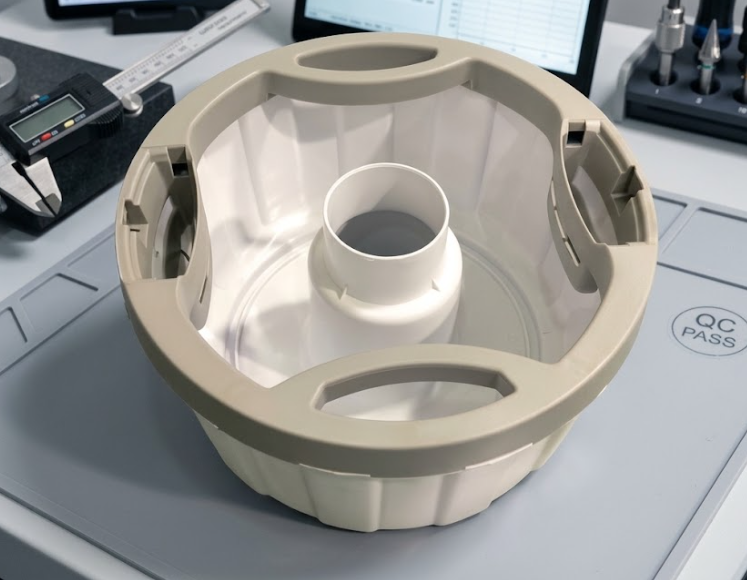
Choosing a washing machine injection mold manufacturer is a production decision, not only a tooling purchase. The supplier must understand how a mold will run after delivery, how its parts will fit an appliance assembly, and how the tool can be maintained when the project enters regular production. A low quotation may look attractive, but the more useful comparison covers engineering review, trial evidence, dimensional control, documentation, and support after acceptance.
Contents
1. Match the supplier to the part, 2. Check engineering depth, 3. Review manufacturing and trial control, 4. Compare quotations correctly, 5. Confirm production support, 6. Frequently asked questions.
Match the Supplier to the Part and Material
Start by explaining the actual component. A washing machine program may include a large top cover, a frame cover, upper or lower water inlet box, spring cap, damper-related parts, or smaller clips and housings. Each has a different balance of appearance, strength, fit, water exposure, and dimensional risk. A supplier that can discuss these differences is more useful than one that simply promises a generic plastic injection mold.
Share the 3D model, 2D drawing, resin grade, annual volume, target cycle, assembly references, surface requirements, and expected operating environment. If the material has glass fiber, flame retardant, mineral filler, or chemical-resistance requirements, state it early. These details influence shrinkage, wear, venting, cooling, and the tool steel or surface treatment selected for the mold.
Evaluation area | Evidence to request | Why it protects the project |
Design review | DFM comments, parting-line proposal, gate and ejection plan. | Problems are identified before expensive machining or rework. |
Mold construction | Tool layout, steel and component list, cooling and maintenance access. | The buyer can check whether the structure suits volume and service needs. |
Trial molding | T1 or later trial report, sample measurements, defect list, and action plan. | Acceptance is based on repeatable evidence rather than a single sample. |
Quality control | Inspection method, critical dimensions, material records, and traceability. | Dimensional decisions remain clear during corrections and production. |
After-sales support | Spare-part list, manuals, response process, and repair responsibility. | The mold remains manageable after it reaches the production site. |
Check Engineering Depth Before the Quotation
A responsible supplier should ask questions before issuing a final price. Where will the parting line sit? Which surfaces are visible? How will the part release? Are there undercuts, deep ribs, bosses, or inserts that need a special mechanism? Where could air be trapped? Which dimensions control assembly? What happens if the selected resin changes? The quality of these questions is often a useful indicator of the quality of the future mold review.
For a large washing machine mold, the supplier should also discuss lifting, mold weight, machine compatibility, cooling connections, and safe maintenance access. A detailed assembly drawing and bill of components make later service easier. If the supplier will also provide injection molding, clarify whether the same team will manage tool correction and process adjustment, or whether those responsibilities are divided between companies.
Review Manufacturing and Trial Control
Precision mold making is a sequence of controlled operations. Steel preparation, machining, heat treatment where required, electrode work, polishing or texturing, fitting, measurement, and assembly all influence the final result. Buyers do not need a sales presentation for every machine in the shop, but they should receive a clear production schedule and inspection approach for critical features.
Trial molding is where the tool meets real material and process conditions. Ask for the resin batch information, machine conditions, sample status, dimensional results, and open actions. A useful trial report distinguishes a tooling correction from a molding parameter change. It also records whether the part was measured immediately or after a defined conditioning period. This avoids accepting a temporary result that changes later due to shrinkage or stress release.
Compare Quotations on Total Production Value
When comparing two mold quotations, place the offers on the same specification sheet. Check the number of cavities, mold base, steel, hot-runner or cold-runner arrangement, slides and lifters, texture or polishing, standard accessories, trial shots, inspection, packaging, and delivery terms. Confirm what is excluded. A lower price may simply omit items that another supplier has included.
Quotation item | What to clarify | Potential hidden impact |
Tool life and steel | Which steel is used for cavity, core, inserts, and wear parts? | A cheaper material can increase maintenance or replacement frequency. |
Trial scope | How many trials and correction rounds are included? | Unclear correction limits can delay acceptance and raise cost. |
Sample approval | Which dimensions and appearance standards define approval? | A sample can look good while failing assembly or functional checks. |
Delivery package | Are drawings, manuals, spare parts, and connection details included? | Missing documentation makes site installation and repairs slower. |
Support terms | Who handles tool corrections after shipment and for how long? | Responsibility gaps can stop production when a problem appears. |
Confirm Production Support Before Shipment
A mold is not finished when it leaves the mold shop. The production site still needs correct installation, water and electrical connections where applicable, safe setup, process records, and a way to report defects. Confirm the mold’s orientation marks, lifting points, cooling circuit labels, spare-part references, and recommended maintenance. If injection molding is part of the supplier’s service, agree on first-article inspection and the process for approving changes.
For overseas buyers, documentation is especially important. Request the final mold layout, component list, material certificates where relevant, dimensional report, trial summary, and packing information. These records reduce the risk of confusion when the tool is operated by a different team months after delivery.
It is also useful to agree on a communication path for engineering changes. The supplier should know who can approve a revised gate, texture, insert, or dimensional correction, and the buyer should receive an updated drawing or revision record after the change. Clear revision control prevents an old sample, an old drawing, and a later mold condition from being compared as if they were the same item.
Make the Decision on Repeatability
The right washing machine injection mold manufacturer is the one that can explain how the tool will produce stable parts and how that stability will be checked. Look for clear engineering assumptions, evidence from trials, practical maintenance planning, and communication that stays specific when problems arise. This approach gives a better result than selecting by price alone and helps protect the appliance assembly, production schedule, and long-term tooling cost.
Frequently Asked Questions
What should I send when requesting a washing machine mold quotation?
Send the 3D model, 2D drawing, resin grade, annual volume, target cycle, surface requirements, assembly references, and delivery location. Include any critical dimensions or testing requirements.
Can a mold manufacturer also provide molded samples?
Many suppliers offer mold trials or injection molding services, but the scope should be confirmed in the quotation. Clarify machine availability, resin supply, sample quantity, inspection, and correction responsibility.
Why are trial reports important?
They show how the tool performed under defined conditions and record dimensions, defects, corrections, and open actions. This makes acceptance more objective and supports future troubleshooting.